
Almost every Indian jewellery guide assumes you are wearing a kurta. For a lot of working women that covers two days in five. The rest is a blazer, a shirt, a dress, or jeans on a Friday - and the rules genuinely change.
Why western tailoring is different
Indian clothing usually brings its own ornament: embroidery, a border, a dupatta. The jewellery works around something already decorative.
Western tailoring is mostly plain. A navy blazer and a white shirt have no decoration at all, which means whatever you wear is the only ornament in the frame. It gets looked at properly. That cuts both ways - a good piece does more work, and a cheap-looking one has nowhere to hide.
The practical consequence: fewer pieces, slightly better ones. One considered piece beats three casual ones against tailoring.
Blazers
A blazer creates a strong vertical line down the front and frames a narrow opening. That opening is where a pendant belongs, and it needs to be short enough to sit inside the lapels rather than vanishing behind them when you move.
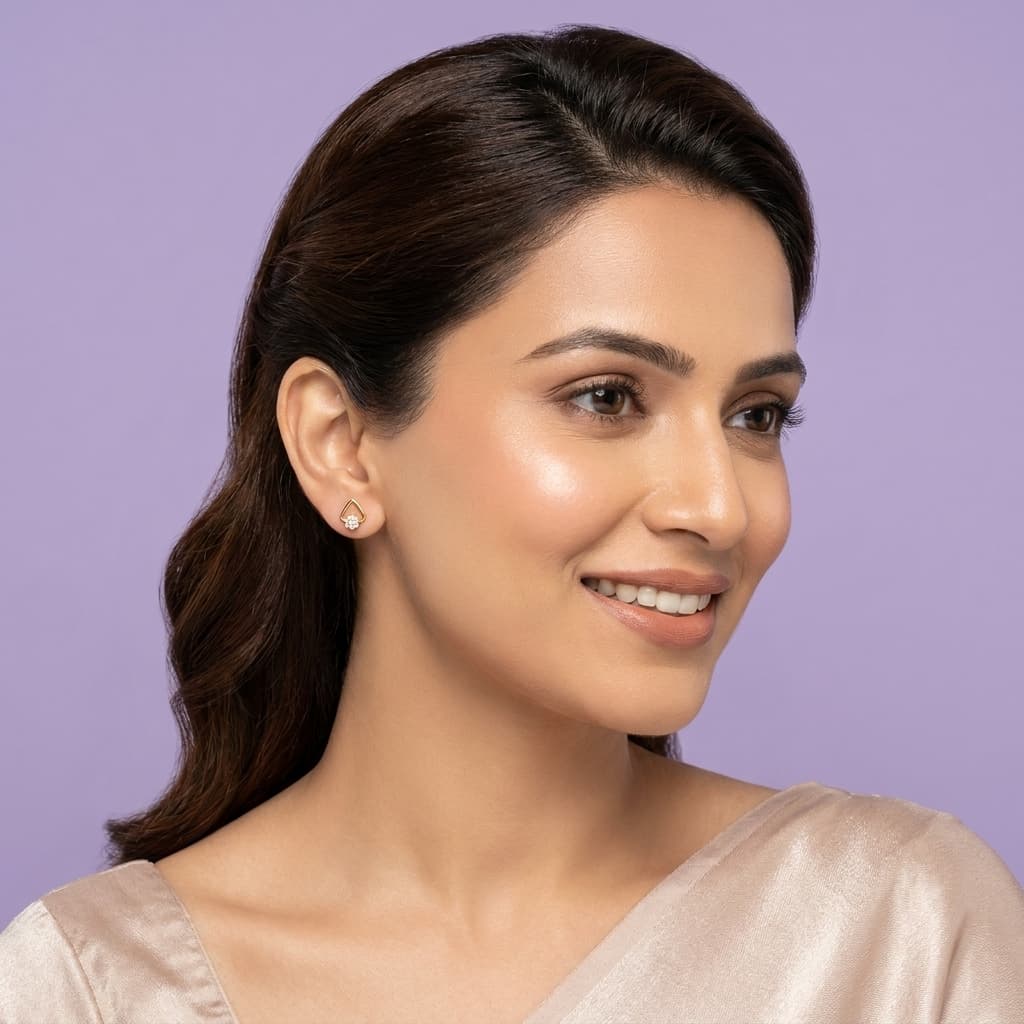
At the ear, structure suits structure. molten-edge-open-square-studs has a defined edge that reads as intentional next to a tailored shoulder, where something soft and floral can look at odds with it.
What to avoid: long drops that swing against the lapel, and anything that catches when you take the blazer off - which happens more often than you would think.
Shirts and formal tops
The collar decides everything. Buttoned to the top, put the emphasis at the ear and skip the neck entirely. Open at the throat, a short fine chain against the skin works well.
Gold-Toned Infinity Link Rope Chain is short enough to sit above a shirt line rather than fighting it.
Dresses
A dress is one uninterrupted surface, which makes it the easiest case here. Nothing competes, so one piece carries the look.
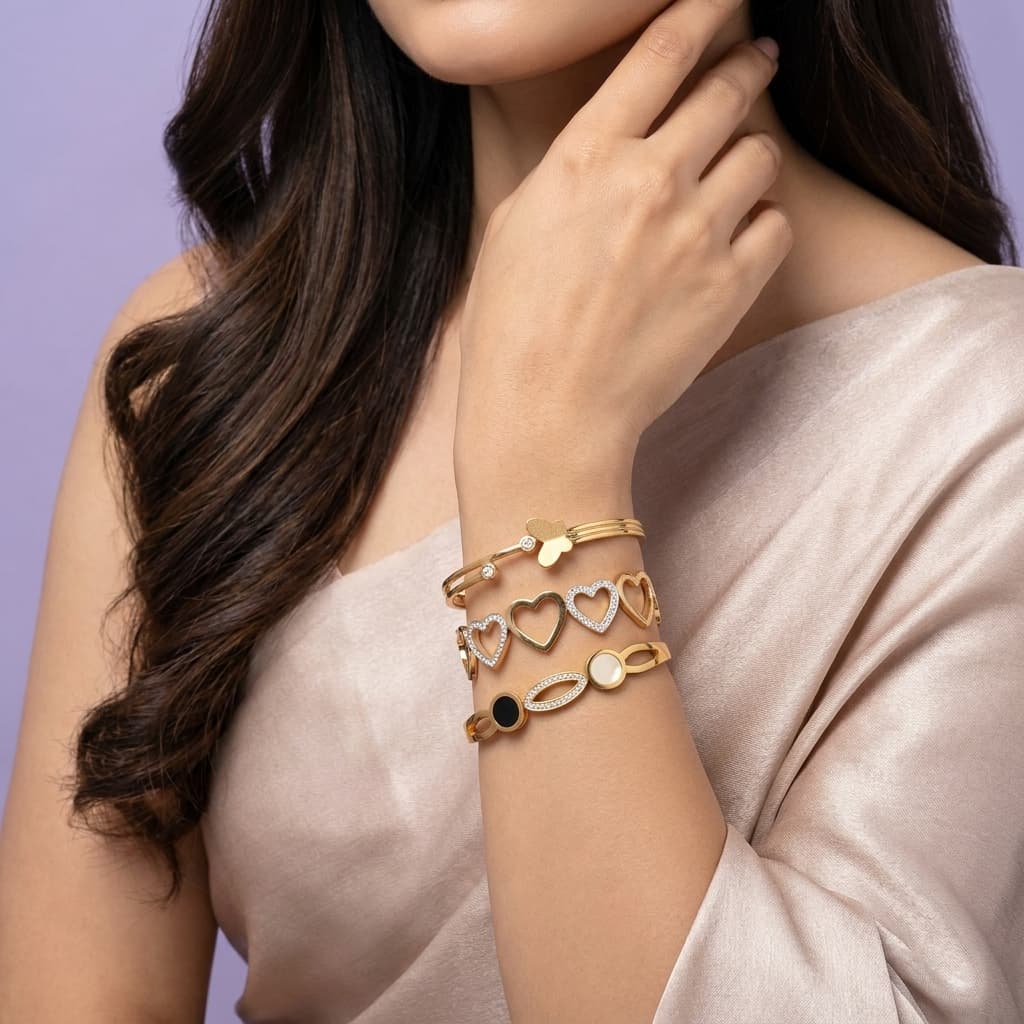
If the dress is plain, this is where a cuff earns its place: Layered Bar Open Cuff Bracelet sits on a bare forearm with nothing arguing with it. If the dress is patterned, do the opposite - small studs, nothing at the neck.
Jeans and a top
The most forgiving case, and the one where people most often wear nothing at all.
Casual clothing takes more jewellery, not less, because there is no formality for it to disrupt. A stack of slim rings works here in a way it would not in a client meeting: slim-zigzag-ring stacks flat and costs less than lunch.
The desk problem
Western workwear means more time typing with bare wrists, which puts a bracelet in constant contact with a desk edge. Keep the profile flat. A raised or textured cuff shows wear along one side within weeks, and that side is always the one facing out.
Rings have the same issue against a keyboard. Low settings survive; tall ones catch.
A three-piece week
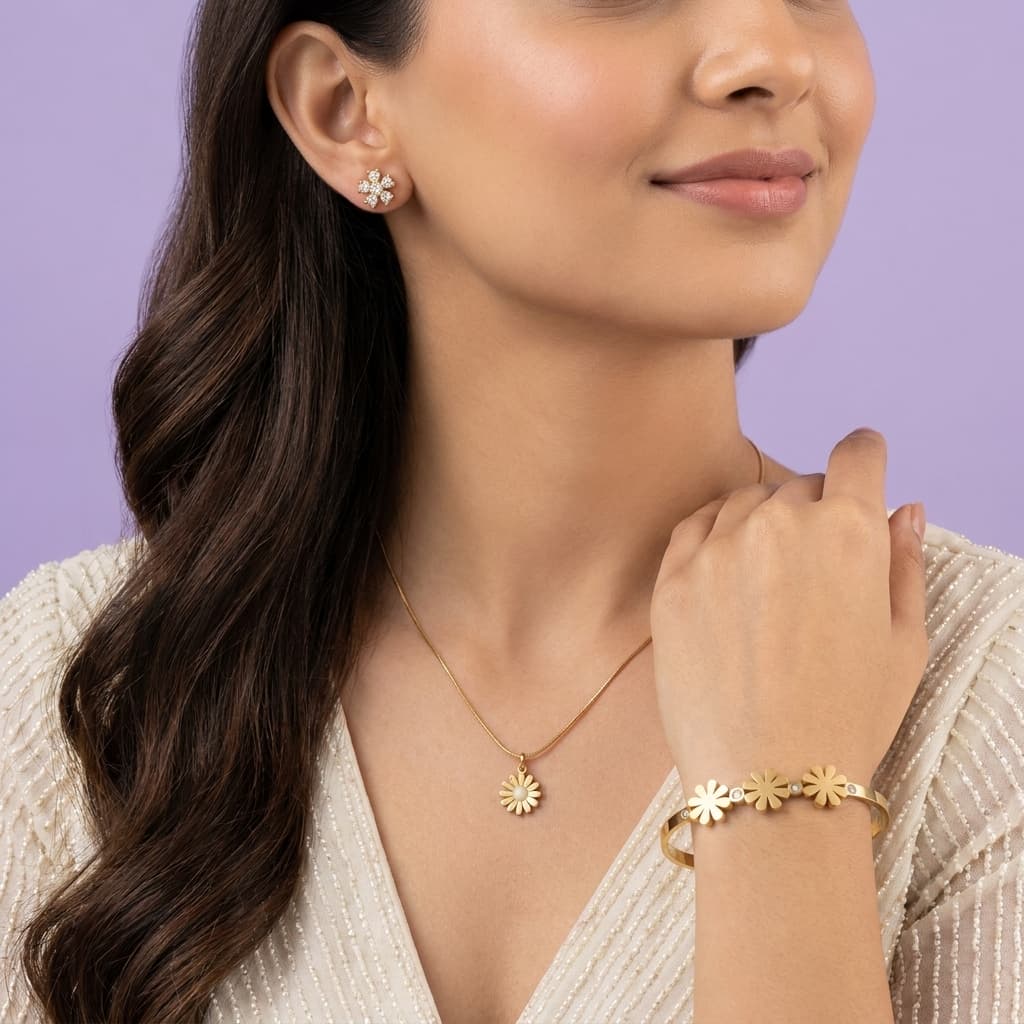
The shortest possible answer: small structured studs, one short pendant, one flat cuff. That covers a blazer, a shirt, a dress and jeans without changing anything except which of the three you reach for.
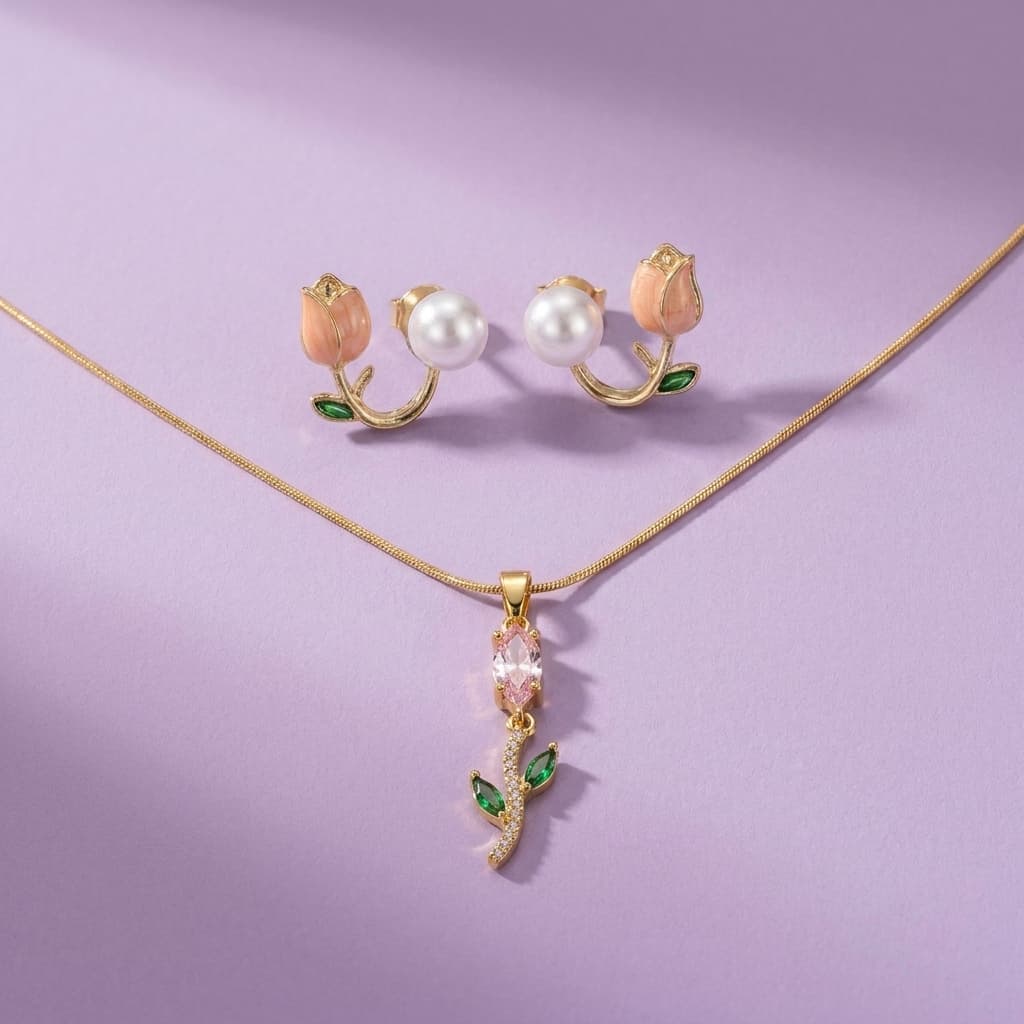
meeting-ready-duo is two of those together; first-day-at-work-set is the fuller version, which is genuinely what it was built for.
Browse bracelets and earrings, or read the complete workwear guide.