Short answer: for fashion rings the index and middle fingers are the safest and most comfortable choices. The left ring finger carries a marriage assumption across most of India, and the thumb reads as deliberately bold. None of it is a rule, but it is what people will read.
What does each finger mean?
These conventions come from a mix of European tradition and local custom, and they vary. Treat them as what a stranger might assume, not as instruction.
- Little finger: traditionally the signet finger. Reads as personal and slightly old-money. No relationship meaning.
- Ring finger, left hand: engagement and marriage across most of India and the West. Worth avoiding if you do not want the question.
- Ring finger, right hand: no such assumption. A good home for a ring you love that would be misread on the left.
- Middle finger: neutral. The most visible finger on the hand and the easiest to wear something with presence on.
- Index finger: historically a signal of status. Today simply the most practical for a ring you want seen.
- Thumb: deliberate and confident. Needs a wider band to look intentional rather than like a ring that slipped.
Which finger is most comfortable?
This matters more than meaning, and almost nobody thinks about it before buying.
Your index finger does the most work. Anything tall on it will catch while you type, cook or carry a bag. Keep flat profiles there, such as the chain link band, which sits close to the skin.
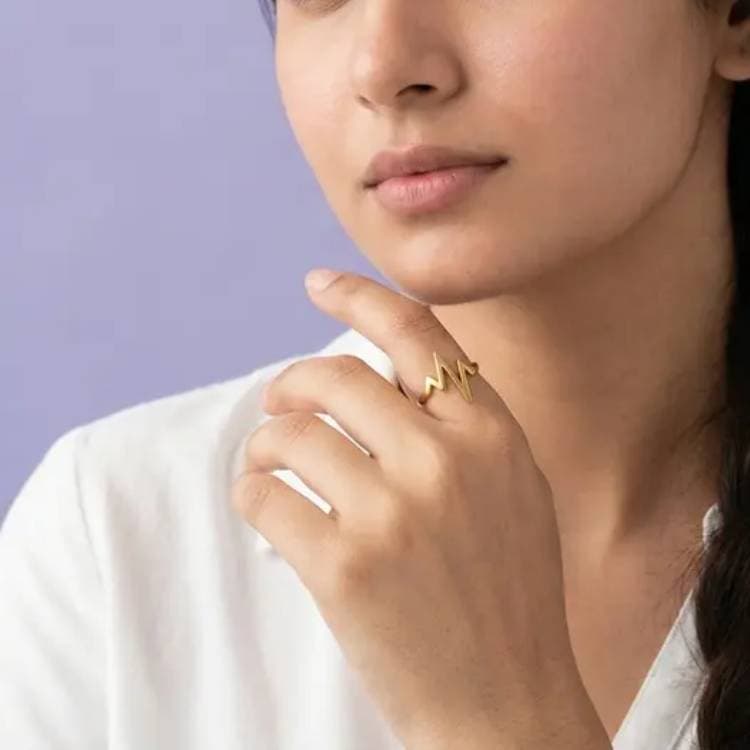
The middle finger is the most forgiving for height, which makes it the right home for a taller peak or a wider cutout band.
The little finger takes the smallest sizes. If you wear 17 or 18 on your index, expect to drop two or three sizes for the little finger, so measure it separately rather than assuming.
Which finger suits which shape?
| Finger | Works well | Avoid |
|---|---|---|
| Index | Flat bands, links, signets | Tall peaks |
| Middle | Anything, including height | Very fine bands alone |
| Ring (right) | Stone-set, wave, infinity | Very wide bands |
| Little | Signet, slim motif rings | Wide or heavy shapes |
| Thumb | Wider plain bands | Delicate fine bands |
How many rings is too many?
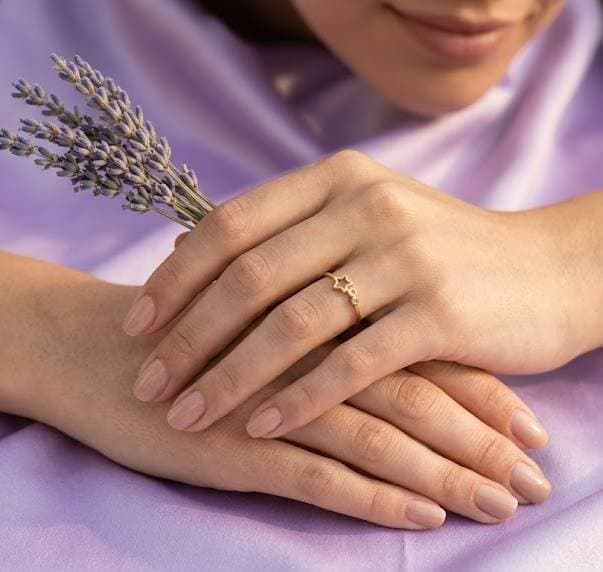
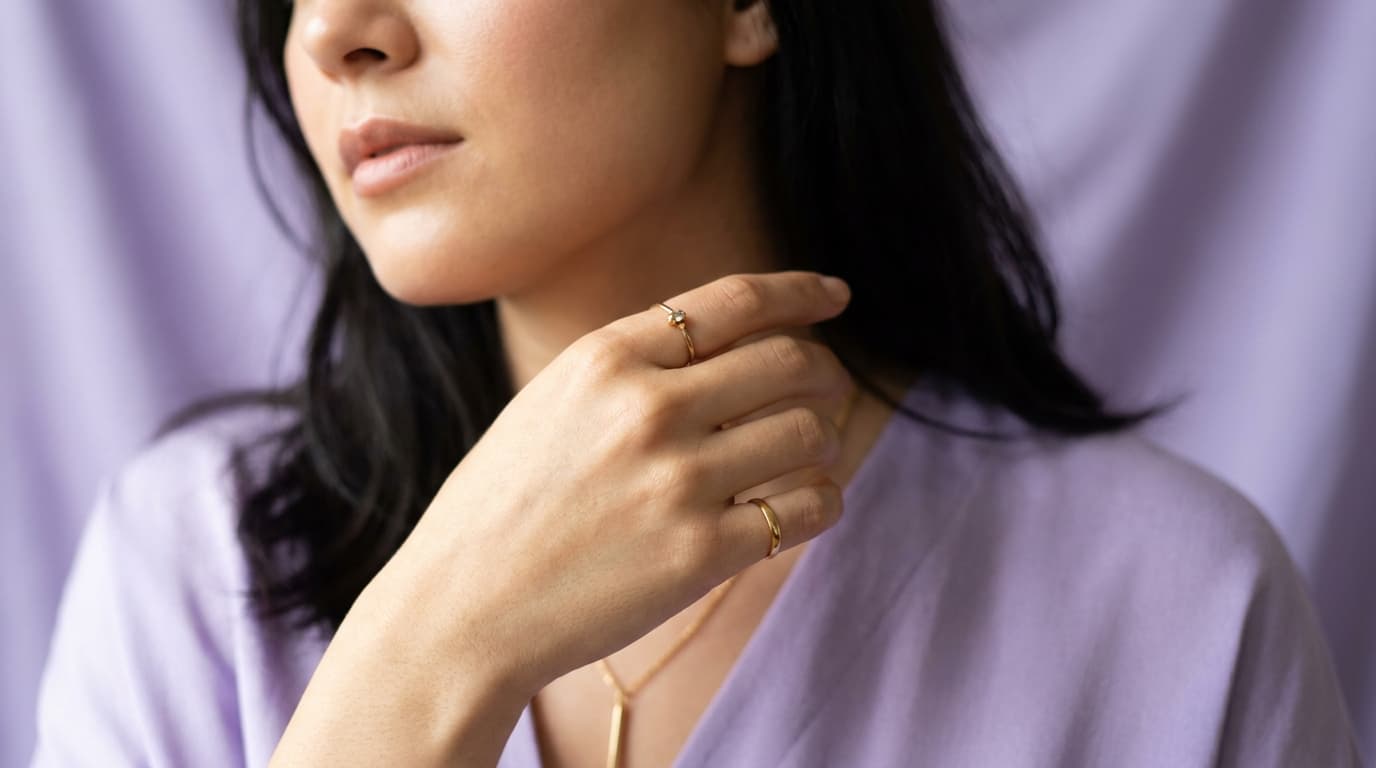
Three across a hand is the number that almost always works, spread over two or three fingers rather than crowded onto one. Leave a bare finger between them so each piece reads separately. All three in a row removes the gaps and turns a stack into a block.
Does the hand you write with matter?
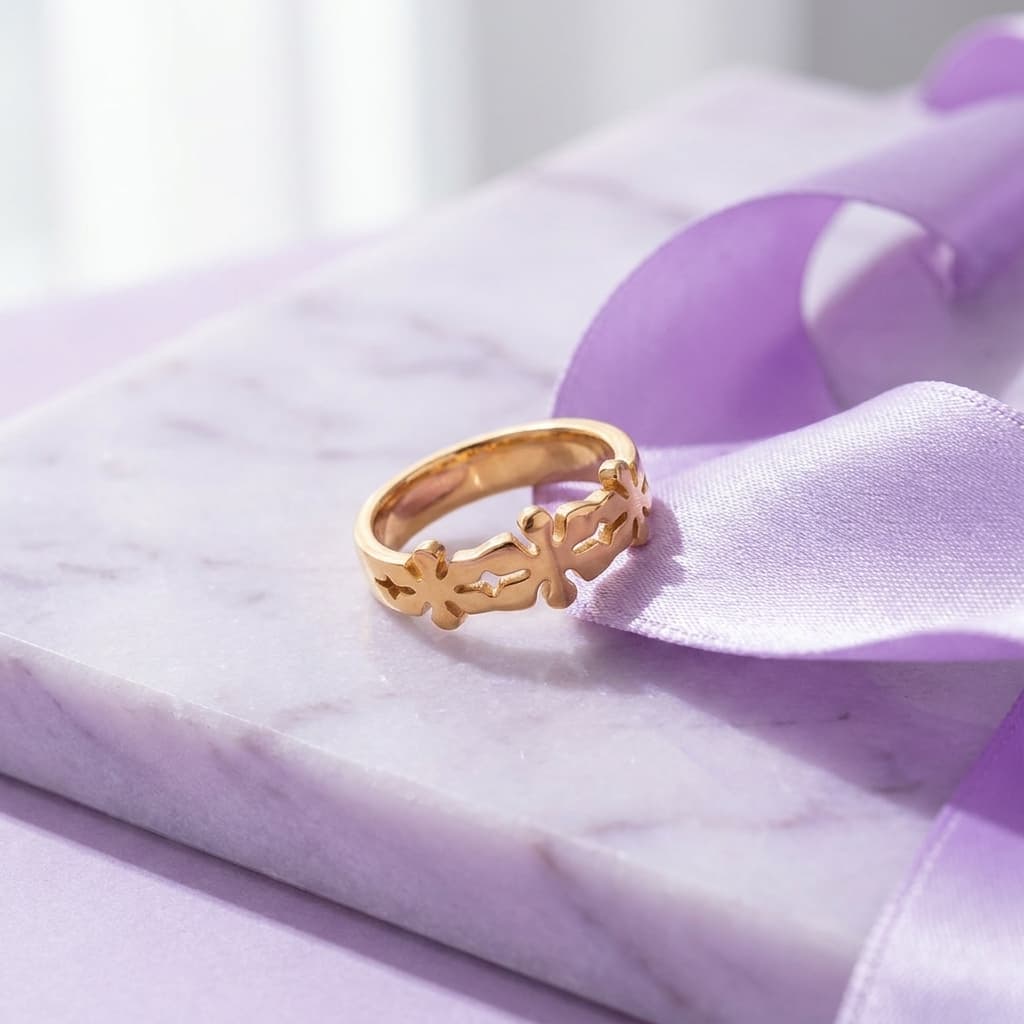
More than the symbolism does. Rings on your writing hand take the most contact and pick up marks faster. If you are buying something with a pattern you want to stay crisp, such as the floral cutout band, put it on the other hand.
The practical answer
Pick the finger the ring is comfortable on, avoid the left ring finger unless you mean it, and stop worrying about the rest. Our rings run sizes 16 to 19, which covers the index and middle fingers for most women.
Frequently asked questions
Which finger should an unmarried woman wear a ring on in India?
Any finger except the ring finger of the left hand, which is widely read as engagement or marriage. The index and middle fingers are the most common choices for fashion rings and carry no assumption about relationship status.
Is it bad luck to wear a ring on a particular finger?
No. The meanings attached to fingers are conventions, not rules, and they differ between regions and communities. The only practical considerations are comfort and whether the ring gets in the way of what your hands do.
Can I wear rings on both hands?
Yes, and it usually looks more balanced than loading one hand. Two or three rings spread across both hands reads as styled. Four or more crowded onto one hand starts to look busy rather than considered.