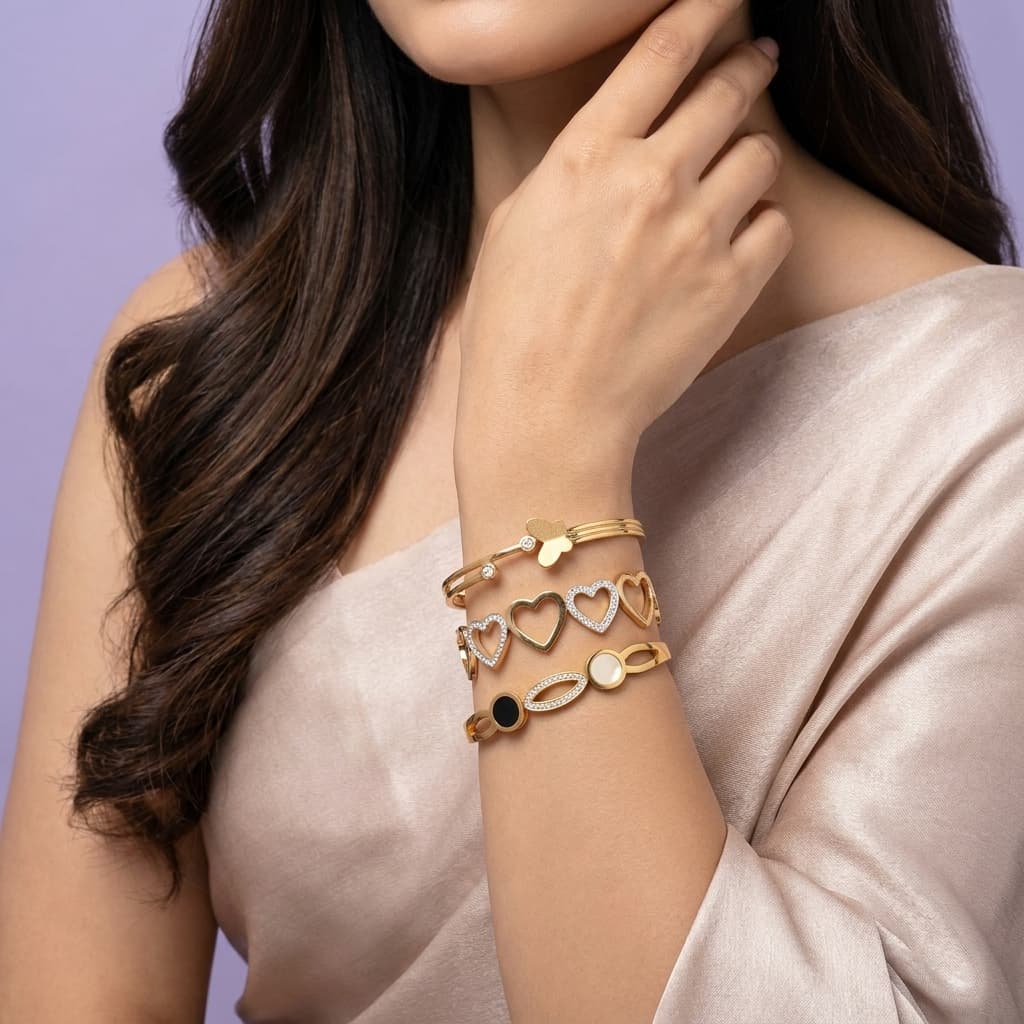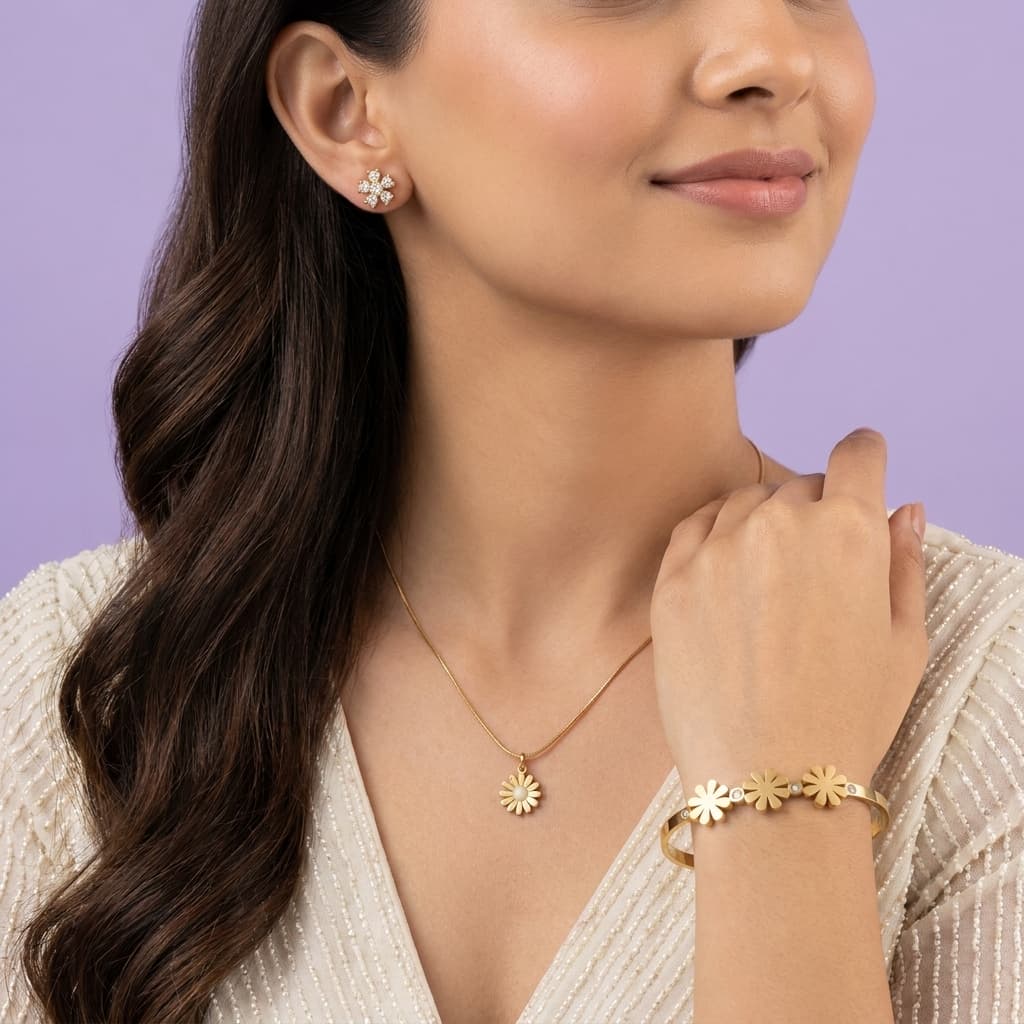

The standard advice goes: check the veins on your wrist. Green means warm undertones, so wear gold. Blue means cool undertones, so wear silver. Deeper skin should avoid yellow gold.
The last part is simply wrong, and the rest is a shortcut a shop assistant uses to close a sale in ninety seconds. It is not useless. It is far less decisive than it sounds.
What undertone actually is
Undertone is the colour sitting beneath the surface of your skin - warm (golden, olive, peach), cool (pink, red, blue), or neutral. It does not change when you tan. It is real, and worth knowing.
The vein test is a rough proxy for it and nothing more. Most Indian skin reads warm or neutral, which is part of why gold-toned jewellery has held its place here for as long as it has. But "most" is doing a lot of work in that sentence, and a rule that is right most of the time is a poor reason never to try the other thing.
Where the rule breaks
The claim that deeper skin tones should avoid yellow gold is the one to discard entirely. Warm gold against deeper skin is one of the highest-contrast, most striking combinations in jewellery, and the idea that it should be avoided has more to do with which faces appeared in advertising for decades than with anything about colour.
The second thing the rule misses: contrast matters more than match. Jewellery sitting very close to your skin's own colour disappears against it. A little contrast is what makes a piece read as jewellery rather than as a smudge. It is why a fine gold-toned chain can vanish on one person and sing on another at the same price.
The test that actually works
Ignore your wrist. Do this instead, in daylight, near a window.
Hold a gold-toned piece against your collarbone and look at your face, not the jewellery. Then do the same with a silver-toned piece. One will make your skin look a little brighter and more even. The other will make you look slightly tired or washed out. The difference is usually obvious once you are looking at the right thing.
Do it in daylight. Shop lighting is warm on purpose, and it flatters gold specifically - which is not an accident.
What we make, and what we do not
Everything we sell is gold-toned. That is worth saying plainly rather than pretending to be neutral: if the daylight test tells you silver tones suit you better, we are not the right shop for your everyday pieces, and you should trust the test over us.
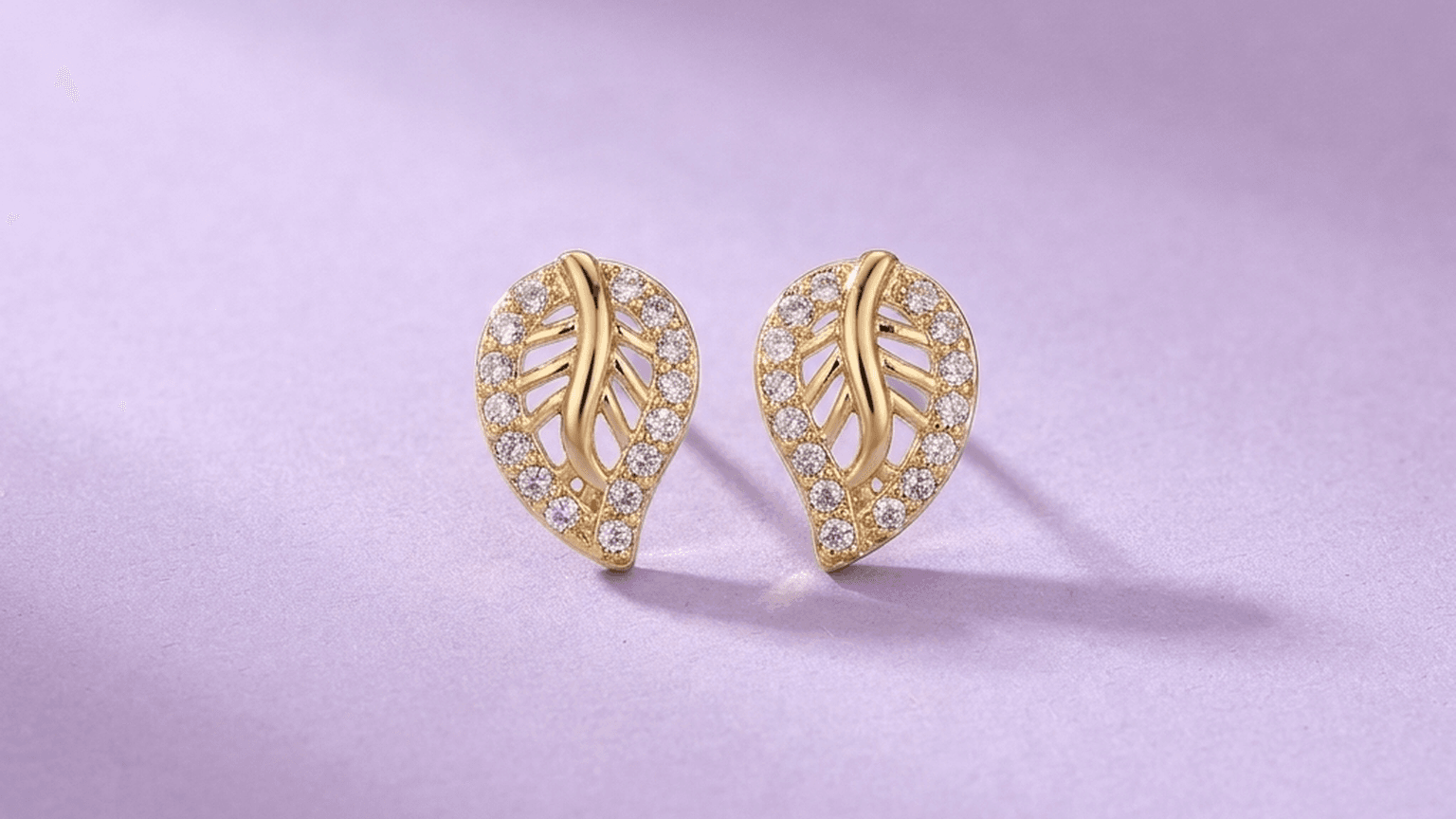
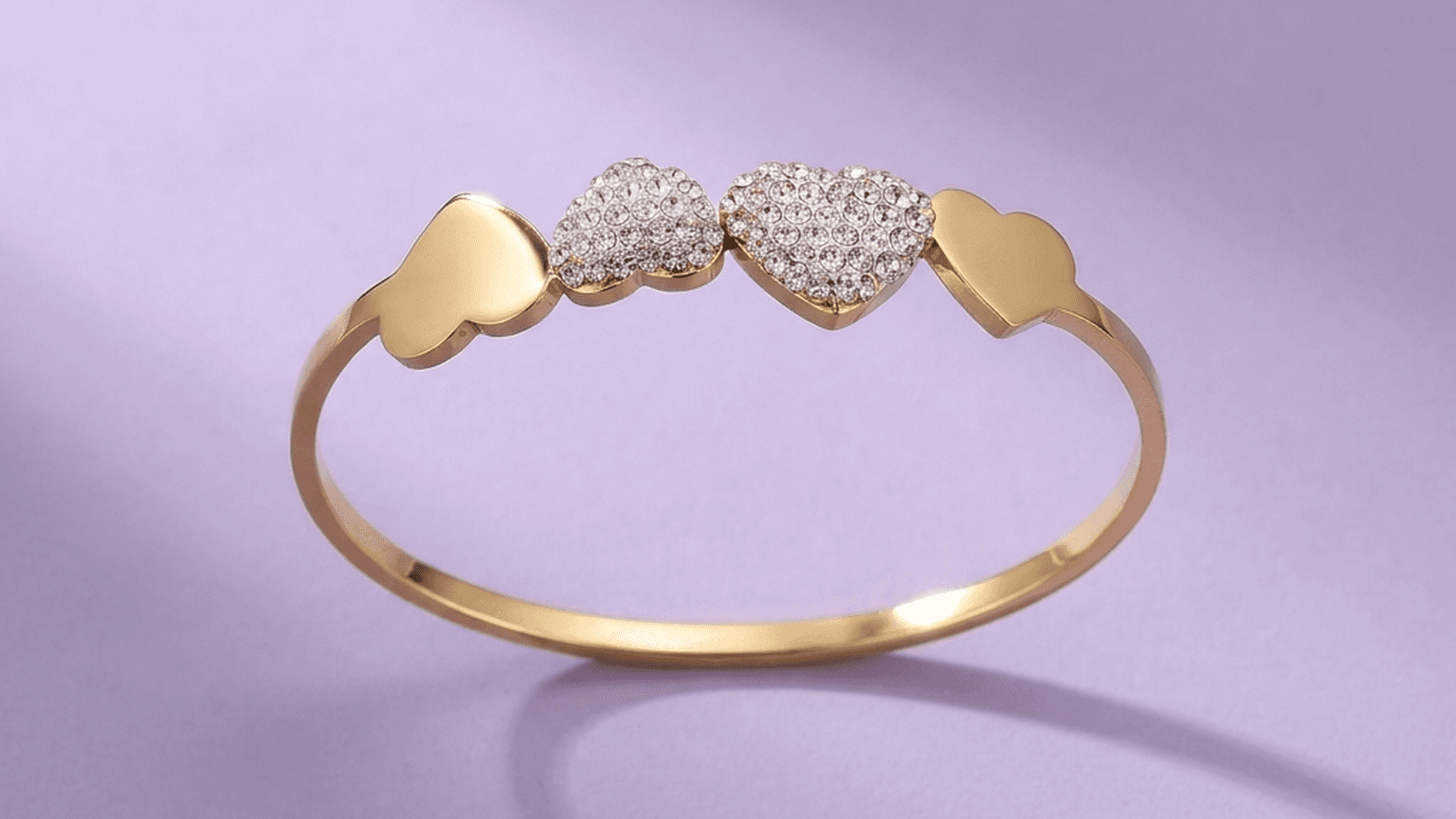
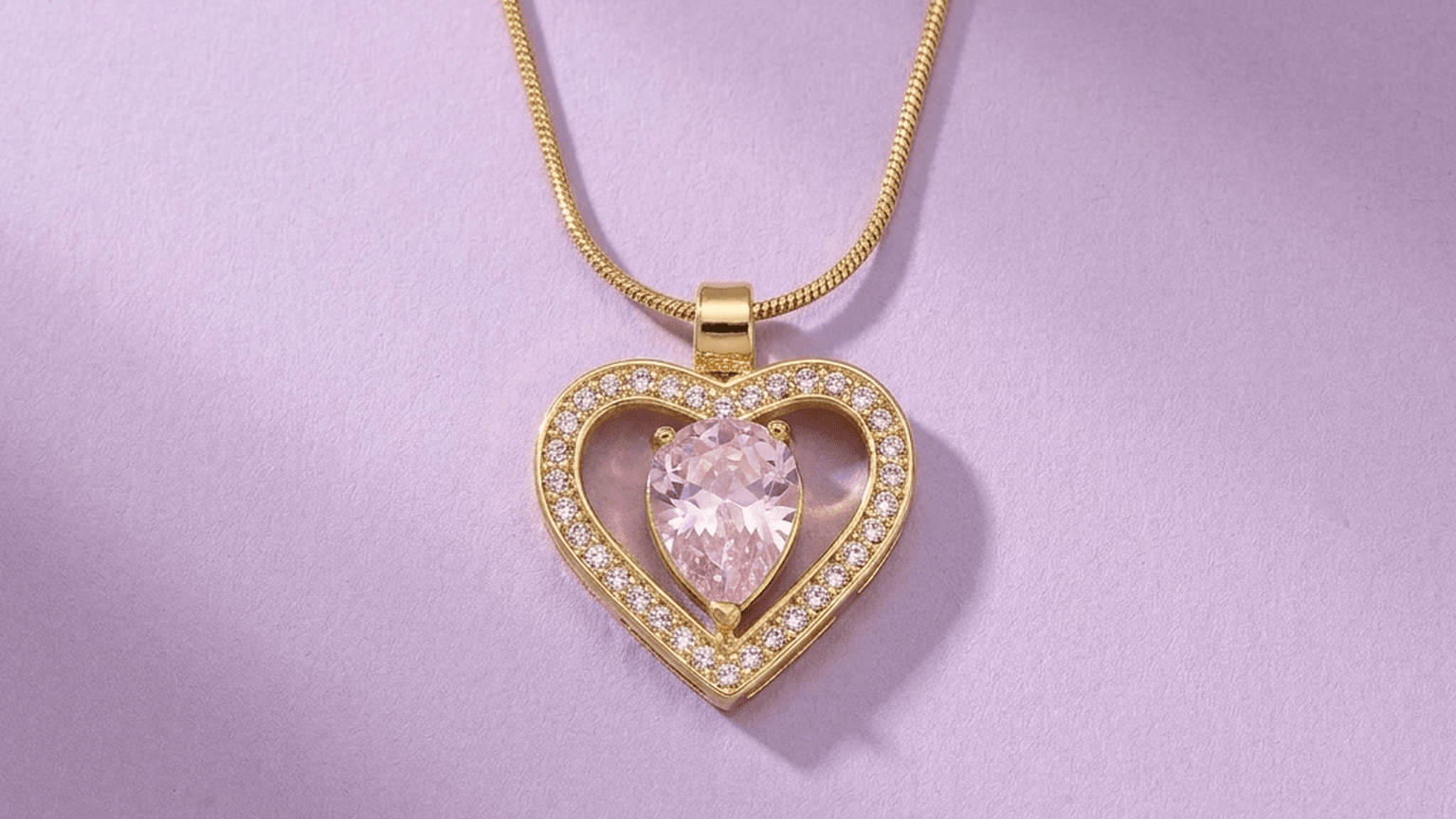
What we would say in our own defence is that gold tones are the safer bet for most Indian skin, and that they carry across Indian and western clothing more easily. Gold-Toned Oval Medallion Snake Chain sits at the collarbone, which is where the test happens. pave-open-circle-studs is small enough that tone matters less. Layered Bar Open Cuff Bracelet is where it matters most, because a cuff sits against a wide area of skin.
The rule that beats both
Whatever you wear most is what suits you, because you will have chosen it unconsciously already. Look at what you reach for on an ordinary Tuesday. If it is all one tone, the question is answered and no test is needed.
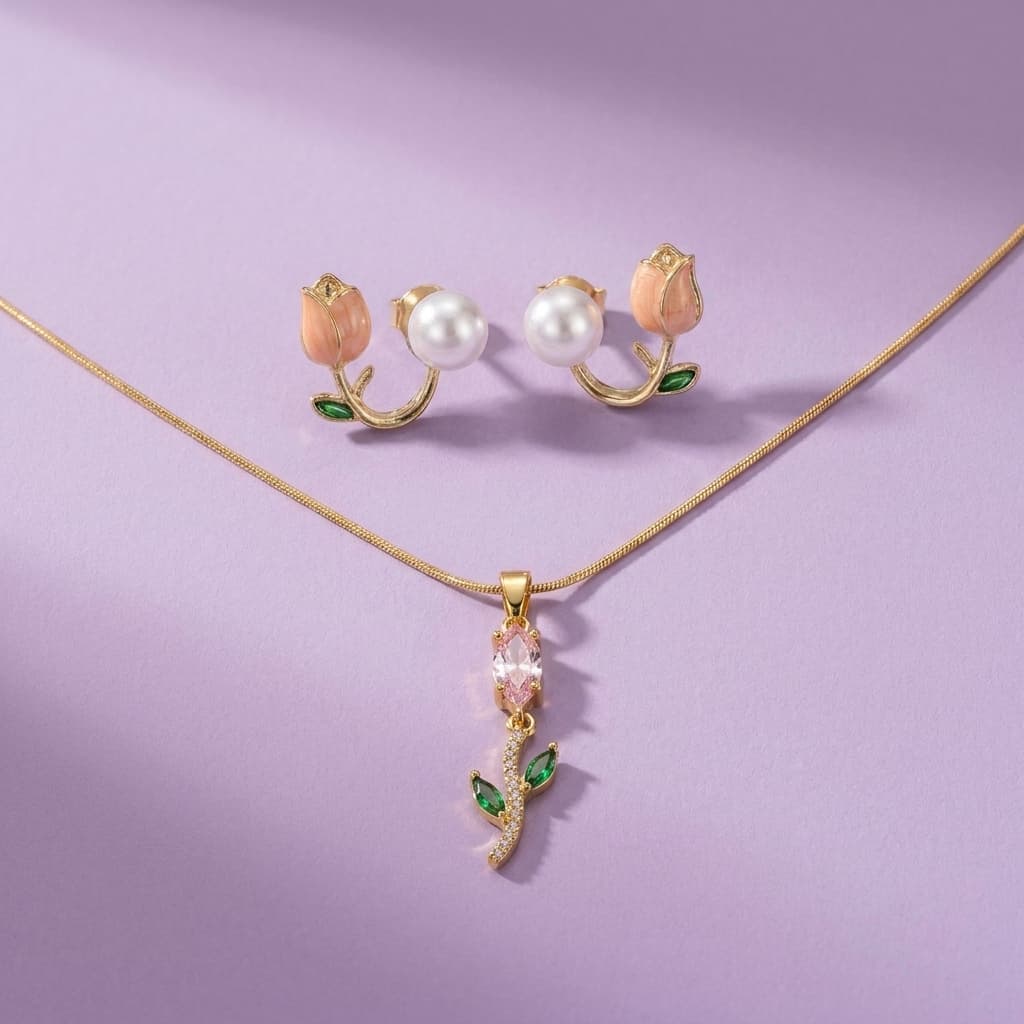
Browse everything we make, or start with desk-to-dinner-trio if you want the tone tested across three pieces at once.