If your ears go red, itchy or sore a few hours into wearing earrings, that is almost never an infection and almost never something you did wrong. It is usually contact dermatitis — a skin reaction to something in the metal touching you.
What actually causes itchy ears from earrings?
Nickel is the most common contact allergen in the world, and it turns up in a great deal of costume jewellery because it is cheap, hard and takes a shine well. Dermatology bodies consistently rank it as the leading cause of allergic contact dermatitis. Reaction to it depends on dose and time, which is why a pair can feel fine for two hours and unbearable by evening.
Two other causes get blamed on allergy but are not:
- Friction and weight. A heavy drop earring drags on the piercing all day. The soreness is mechanical, not chemical.
- Trapped moisture and product. Sweat, shampoo, hairspray and perfume collect behind an earring back and sit against skin for hours.
How do I tell an allergy from irritation?
A rough guide, not a diagnosis. An allergic reaction tends to be itchy, spreads slightly beyond where the metal touched, and comes back reliably with the same pair. Simple irritation tends to be sore rather than itchy, stays exactly where the pressure was, and settles within a day. If a lobe is hot, swollen, weeping or painful to touch, that is a job for a doctor, not a blog post.
What should I wear if my ears react?
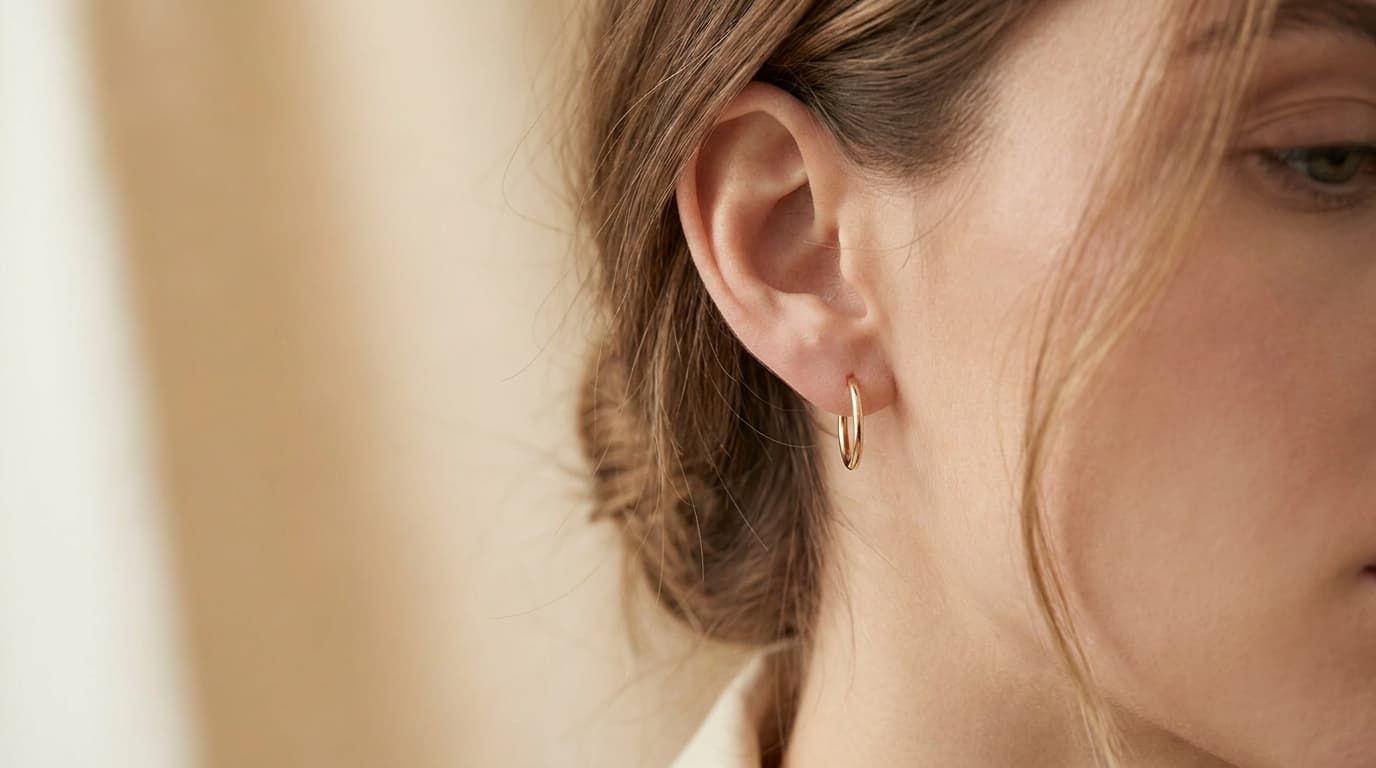
- Go lighter. Weight is the variable most people never consider. A small hoop or stud puts a fraction of the load on the piercing that a long dangler does.
- Reduce contact time. Take earrings out before sleeping and before a shower. Most of the damage happens in the hours you are not thinking about them.
- Keep the post and back clean. Wipe both with a soft dry cloth after wear. Residue is doing more work than you think.
- Put jewellery on last. After perfume, after hairspray, after moisturiser. Those products sitting between metal and skin make everything worse.
Does gold plating help?
Plating puts a layer between you and whatever the base metal is, which is why a new pair often feels fine and an old favourite does not. Plating wears with time, friction and moisture, and once it thins the base metal is back in contact with skin. This is the honest reason a pair that was comfortable last year may not be this year. It is also the best argument for treating fashion jewellery as something you rotate rather than wear daily for years.
A practical routine
Rotate between a few pairs instead of wearing one constantly. Keep them dry. Store them in a pouch rather than loose in a drawer where they scratch each other. Take them off for the gym, the shower and the pool. None of this is glamorous, but it is the difference between jewellery that stays comfortable and jewellery that ends up in a drawer.
If you want to start lighter, our Light & Comfortable edit is built around small studs, slim hoops and fine chains chosen for weight and smooth finishes rather than drama.